Coins Preferred to Stocks for Investment
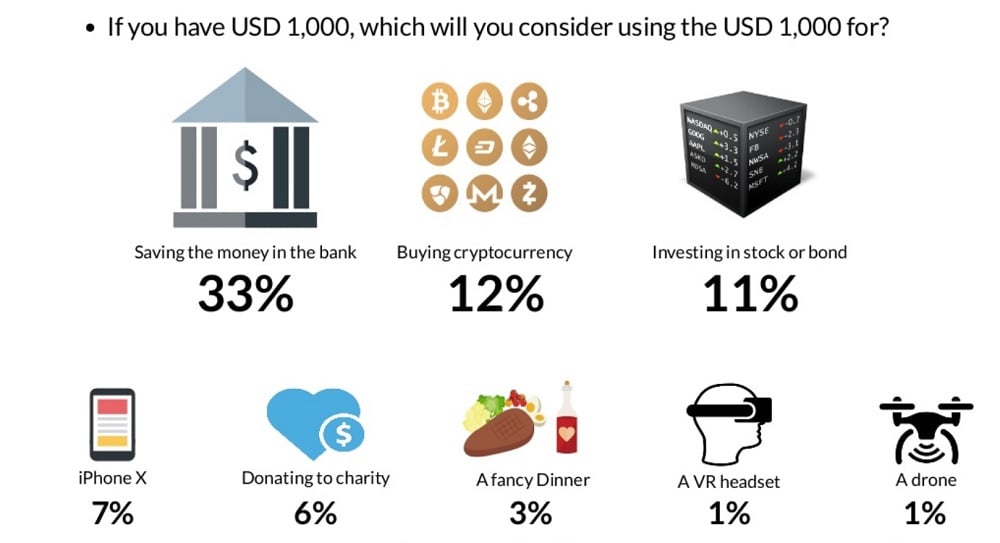
Acquiring cryptocurrencies is more attractive to Indians than investing in stocks or bonds. 16% of the participants in the study said they would buy cryptos if they had $1,000 to spend. Saving in a bank account, however, is still considered a major option – almost a quarter of those asked (24%) admitted they would entrust their cash to the traditional financial system.
The survey was conducted by Pundi X, a cryptocurrency point-of-sale solution provider, together with NEM.io Foundation and Stellar.org through Opeepl mobile “live sampling” technology. The Indonesian company has been preparing to enter the Indian market with a network of POS terminals. The stubbornness of the government in Delhi, refusing to recognize cryptos as legal tender, may have forced Pundi X to put its plans on hold, according to local media. Indian citizens and businesses have insisted for clear guidelines in regards to trading, mining and taxation.
Nevertheless, the potential of the Indian market has been recognized by Pundi X’s management. One in every 10 bitcoin transactions in the world takes place in India, company president Constantin Papadimitriou told Quartz. Other cryptocurrencies are also attracting attention in India, but bitcoin is the pronounced leader with 68% of Indian respondents placing it first, when asked “Which cryptocurrencies do you know?”.
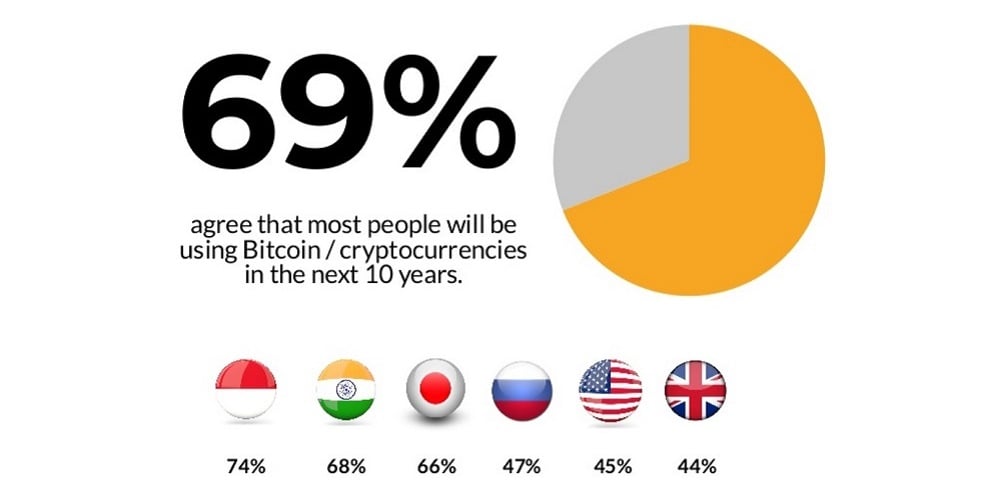
3,000 people from 6 countries, including 500 Indians, have answered questions tailored to determine their attitude towards bitcoin and its alternatives. The “State of Cryptocurrency report” explores mainstream adoption and coin acceptance in India, Indonesia, Japan, Russia, UK, and the US. It has been conducted from Dec 21, 2017 to Jan 2, 2018, with respondents aged 18 to 59 years old. The study reveals a healthy interest in cryptocurrencies, while evaluating purchase behavior.
Cryptos Wanted More than Phones and Drones
The report compares crypto purchases to other items that consumers may consider buying. According to its authors, people in the surveyed counties would prefer investing in cryptocurrencies (12%) to spending on an iPhone X (7%), a VR headset or a drone (both 1%), if offered a thousand dollars. A fancy dinner isn’t much higher in the list with just 3%. Saving in a bank, however, is still the top option in all six countries with 33%, but with 11% buying stocks or bonds falls behind acquiring cryptos.
The study clearly shows that people from very different jurisdictions want to use their cryptos for both investing and trading (35%) and for making purchases (again 35%), with their “storage of value” feature placing third (27%). Selling goods and services (16%) is just a digit behind paying outstanding bills (17%), when it comes to spending cryptocurrencies. 13% of the interviewed would use bitcoin or any other to transfer funds locally and 10% for international transfers.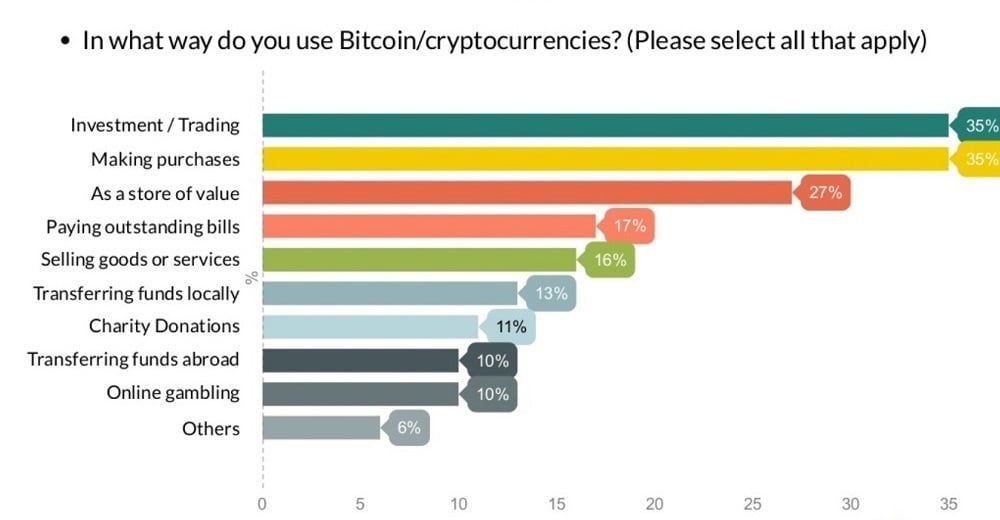
The unstable value of bitcoin remains a major concern for most respondents, along with the excuse “I don’t know how to spend the cryptocurrencies”. With just 5%, “It’s illegal” remains last among the answers to the question “What are the reasons that you don’t purchase/own bitcoin or other cryptocurrencies”. Crypto owners, however, make frequent transactions – three quarters of them have made at least 2 in the last 3 months. With 24%, local online exchanges are preferred by people considering to buy bitcoin or an altcoin. Almost 60% of the interviewed think of cryptos as “digital money”.
Comments
Post a Comment